Rusolut Platform 11: Breakthrough NAND Read Fine-Tuning in Visual NAND Reconstructor
With newer NAND chips, successful physical acquisition and recovery often require far more than a single read attempt. The process may require multiple reading cycles, read-retry adjustments, and extensive error correction before usable data can be reconstructed – a workflow that can take days in complex cases. Rusolut Platform 11.0 introduces Advanced Read Fine-Tuning, a breakthrough option designed to speed up this process by giving users more precise control over NAND read quality.
Instead of relying heavily on post-read error fixing, this powerful new mode allows you to precisely fine-tune your reading parameters before you even start the initial dump. By automatically finding the optimal voltage thresholds for your specific chip’s physical state, the initial dump is extracted with dramatically higher quality from the very beginning. This drastically reduces the need for subsequent read retries and allows you to achieve a cleaner, error-free image much faster – a critical time-saving advantage when dealing with today’s massive, high-capacity NAND devices.

The software scans the memory chip and visualizes the Error Score for each memory cell threshold. The algorithm intelligently locates the U-shaped minimum of the Error Score curve and automatically selects the optimal reading parameters for the chip, helping maximize data yield on the very first pass.

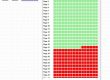
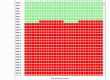
The difference in data quality speaks for itself. On the left, a standard initial read produces an ECC map saturated with uncorrectable errors shown as red blocks. On the right, the exact same memory area, read with fine-tuned parameters, delivers a clean green ECC map right out of the gate. Importantly, this optimization happens before ECC processing, improving the quality of the raw read before correction begins. By reducing the time spent on error correction and repeated retries, Advanced Read Fine-Tuning helps resolve each case faster.
eMMC-NAND Reconstructor improvements
The eMMC-NAND Reconstructor workflow and interface have been refined with new convenience features and greater automation, giving users more precise control over the entire data reconstruction process. One of the key new features is the ECC Map, which provides a clear visual overview of the NAND chip’s condition. It helps users quickly assess memory quality, estimate the chances of successful data recovery, and better understand how error correction and rereading affect the final result.

The new interface also allows users to define the number of reread passes. Modern NAND chips often require five or more passes to effectively reduce bit errors. Users can run rereading and ECC correction separately for a selected element or apply the process to all elements automatically.

ECC logs have also been added, allowing users to review how the ECC process was performed. These logs provide valuable insight for analysis, validation, and troubleshooting.

Other platform improvements
-
Significantly increased BCR processing speed in cases with many bad columns.
-
Significantly increased bBCR processing speed in cases with many bit-level bad columns.
NAND chips
-
322CC30832EA3000
-
453C96937E500E04
-
453E96937E510E04
-
453E99B3FA6B081E
-
45409BB37E6B081E
-
45489AB3FE6B081E
-
45B595A5EA123200
-
45CE96327ED4
-
45D7988276D5A0A0
-
9848980376E40816
-
98DED5327AD50A01
-
EC1C98AF84
-
EC1E98AF84CDEC1E
-
EC5E981F84C2EC5E
-
EC5FA83F88CF0080
-
ECF1009540
-
45489AB3FE6B081E
-
EC1E98AF84CDEC1E
Some of the configurations above have been updated
New scramblers (XOR keys)
-
AUmonolith(18432b_384p_28_eccXOR_122b)_988EE1
-
IS918-FN08(8640b_128p_ecc50b_sa4b_xoredSA_xoredECC)_2FB7BD
-
IS918-FN08(8640b_128p_ecc50b_sa4b_xoredSA_xoredECC)_624BBB
-
Make the syntax correct for all XORs’
-
MW8289E(18048b_256p_xoredSA_4b_xoredECC100b)_A05F53
-
PS_MicroSD(17664_256p_xoredSA_70b_ECC)_5061FD
-
PS_MicroSD(18432_256p_xoredSA_70b_ECC)_5061FD
-
PS_monolith(18432b_448p_xoredSA_4b_ECC_116b)_0A86B5
-
Sandisk 20-82-00469-2(18336b_576p_ecc230b_xoredSA)_C634C7
Some of the XOR Keys above have been updated
New ECC/BCH
-
FC3379_18048(ecc102b)_16
-
FC3379_18592(ecc126b)_16
-
MW8289E_18048(ecc_100b)_16_X
-
No_name_AU_18432(ecc122b)_28_X
-
PS251-07-V_18592(ecc126)_16
-
SM_mSD_18432(20SAecc_ecc120b)_1+16