Rusolut Platform 11.2: New AI-XORs and enhancements
Rusolut Platform introduces major improvements to AI-XOR analysis, with new algorithms, faster key recovery, and support for additional controllers. FC and FC33 XOR generation is now significantly faster, while SM AI-XOR gains improved search performance and a new Ignore BCR option for non-standard cases. A new AI-XOR element for Phison PS2251-70-25 further expands automatic XOR recovery support.
New AI-XOR for PS2251-70-25
A new AI-XOR element for the Phison PS2251-70-25 controller is now available on the Rusolut platform. This controller is commonly used in USB flash drives.
The recovery workflow is straightforward: once ECC is detected, adjust the page layout and start the XOR analysis. Depending on the case and NAND data structure, the analysis typically takes 3 to 10 minutes.
This new element simplifies recovery from Phison-based devices, reducing analysis time and making these cases faster and easier to process.


New Features and Enhanced Key Recovery Speed for SM AI-XOR Element
Some NAND recovery cases do not follow the usual SM XOR behavior.
Normally, SM controllers shift the XOR sequence according to bad column positions. This differs from controllers such as Phison, Toshiba, or Alcor Micro.
In some rare cases, however, the standard SM method does not work even when the configuration appears to be correct.
For these cases, we added a new Ignore BCR option to the SM AI-XOR element.
When enabled, XOR is generated without taking bad column positions into account. This can solve cases where the standard SM XOR method fails.
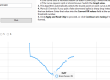
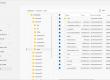
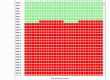
The screenshots show result without Ignore BCR, with Ignore BCR and the recovered file system


Faster and improved FC and FC33 AI-XOR elements
New AI-XOR key generation algorithms for FC and FC33 significantly reduce analysis time and improve recovery of missing XOR key fragments.
For FC XOR, the previous algorithm could recover missing parts of the key, but the process sometimes took 50 minutes or more. The new version usually completes the same stage in under 10 minutes, often recovering the missing fragments during the first pass.
The biggest improvement is in FC33 XOR. Previously, XOR analysis typically took 30–60 minutes and did not always produce a complete key. The new algorithm can generate a 100% XOR key in just 1–3 minutes, using only a few data blocks.


NAND chips
-
453A949376
-
45489AB3FE6B081E
-
45DE949376510F04
-
983E98B3F6E3081E
-
98DEA1327A
-
EC1E98AF84CD
Some of the configurations have been updated
New scramblers (XOR keys)
-
CBM2199E(18432_1344p_ecc99)_C1E5B2.xor
-
CBM2199ESS(16k_256p)_CF7ED4.xor
-
SSS6131(18336b_384p_1140_xoredSA_ECC)_809E9C.xor
-
SSS6131(18432b_384p_1140_xoredSA_ECC)_809E9C.xor
Some of the XOR Keys have been updated
New ECC/BCH
-
Black_blob_18336(ecc98_30_X.bch
-
CBM2199ESS_18048(ecc87b)_16.bch
-
CBM2199ESS_18048(ecc88b)_16.bch
-
monoUFD_18432(ecc98)_16_X.bch
-
SM3259 AB_18432(ecc88b)_30+1.bch